
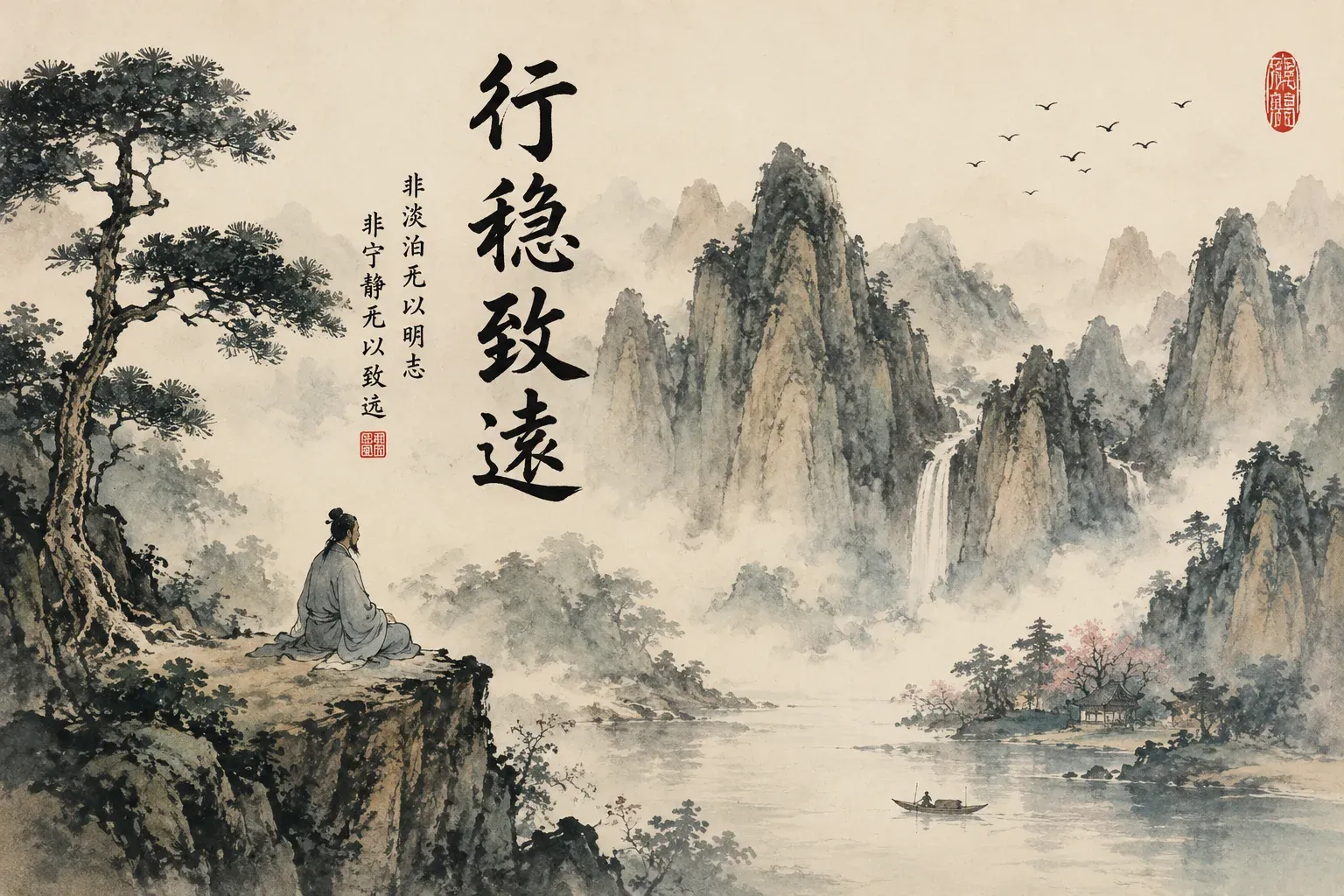
There is a quiet complaint among Chinese learners that is worth taking seriously: somewhere between the textbook and the flashcard app, characters stopped feeling like anything. They became data, items in a queue, a yes or a no. So the question, half-frustrated and half-genuine, is fair: is Hanzi actually art, or did flashcards commodify it into something flat?
Both things are true, and the resolution is in your hands, literally.
Characters really are forms
It is not romantic exaggeration to call Chinese characters an art. Calligraphy, 書法, is one of the most revered art forms in Chinese culture, and even ordinary characters are balanced compositions: components sized and placed in relation to each other, with a logic to their structure and a tradition behind their shapes. A character is something made, not just something read. We touch the structural side of this in which part of a Hanzi character holds its meaning.
So yes, there is real art there to lose.
What flashcards optimise away
Flashcard apps are extraordinary at one thing: turning knowledge into efficiently reviewable data. For Hanzi, that means reducing a character to a recognition prompt, do you know this, yes or no. It works, and it is not evil. But optimisation always removes whatever it does not measure, and what gets removed here is the act of making the form. You never draw the character. You judge it. Over months of that, characters can flatten into tiles, and the craft quietly drains out. We looked at the emotional cost of this loop in crying over Anki flashcards and is Anki bad for ADHD learners.
The flattening is not inherent to the characters. It is a side effect of practising only the recognition half.
Writing brings the form back
The fix is almost suspiciously simple: make the form instead of identifying it. When you write a character from memory, you are back in the act, balancing components, ordering strokes, producing something rather than rating it. That is the part calligraphers never lost and flashcards never had. And it is not a detour from learning: producing from memory is also the most effective practice, as we argue in the case for a dedicated Hanzi writing app and blind drawing for Chinese characters.
You do not have to choose between efficient memory and the craft. Writing from memory gives you both: it is the strongest practice and the one that feels like making something.
Where Hanzi Write Practice fits
Hanzi Write Practice is built around the making. You draw each character from memory on a grid, attending to its structure and stroke order, then check your work. It is not a calligraphy studio, and it will not turn you into a brush master, but it puts the act of forming the character back at the center, where the art lives.
So: Hanzi is art, and flashcards flattened your experience of it, not the characters themselves. Pick the pen back up, and the dimension returns.
Join early access and make characters again, not just rate them.