
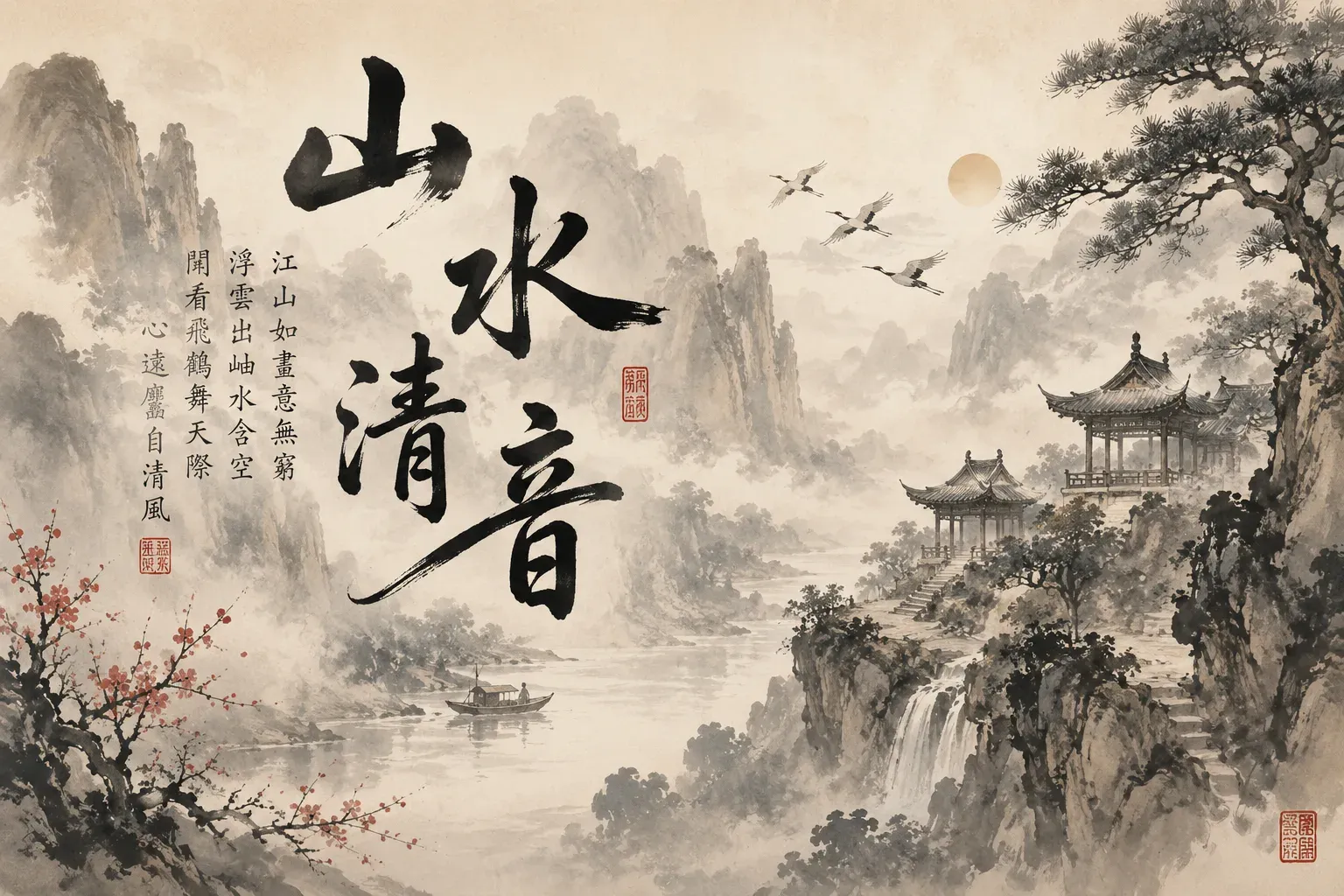
Hand-copying a sutra and learning to write Chinese characters can look identical, ink, brush, careful strokes, but they are two different goals, and the tool that serves one can mislead the other. Sutra-copying is a contemplative practice; learning to write is a memory practice. Getting clear about which you want is the whole question, because it changes whether you should trace calmly or produce from memory. Here is the distinction.
Sutra-copying is meditation, not memorization
The traditional practice of copying a scripture by hand, chaojing, often the Heart Sutra, is a form of meditation. Its value is the slow, deliberate, attentive act of forming each character, a settling of the mind through the brush, not retaining the text. You are not trying to memorize the sutra; you are practicing presence while writing it. So for this goal, tracing or unhurried copying is not a shortcut, it is the point, the same way writing characters can calm you without any aim to learn them.
Learning to write is a memory practice
Learning to write Chinese has the opposite center of gravity. Here the goal is recall: being able to produce a character from memory when you need it, which means the value is in retrieval, not in the calm of copying. For Chinese, handwriting beats typing for learning, producing from memory engages the generation effect, and the testing effect shows retrieval builds memory. For this goal, tracing is a warm-up at best, because following a guide skips the recall that does the teaching, the heart of the case for a writing app.
Why the goals call for opposite tools
This is why the same activity splits. For meditation, you want the text in front of you and a calm, deliberate pace, and removing it would defeat the contemplative purpose. For learning, you want the text hidden and yourself producing it, because keeping it visible defeats the recall. So trace for meditation, produce from memory for learning, and the order you practice for learning matters per stroke-order learning. Trying to make one tool do both, or using a tracing tool to learn, is where people get stuck, the same clarity behind learning to write characters.
Can they overlap?
Gently, yes. A calm, offline, no-timer practice space can host mindful copying as a quiet ritual, and if you copy a text you also slightly familiarize yourself with its characters. But the overlap is partial: meditative copying will not, on its own, make you able to write those characters from memory, and from-memory drilling is not especially meditative. So treat any overlap as a bonus, not a plan, and pick your primary goal, the same honest framing as ordinary stroke-order practice.
Meditative copying versus learning to write
| Sutra-copying (meditation) | Learning to write (recall) |
|---|---|
| The calm act is the point | Recall is the point |
| Trace or copy, text visible | Produce from memory, text hidden |
| No need to remember | Remembering is the goal |
| A contemplative ritual | A memory practice |
Choose your column first; the right tool follows from it, not the other way around.
A plan to pick your practice
- Decide your goal: meditation or learning.
- For meditation, copy or trace calmly, text in view.
- For learning, hide the text and produce from memory.
- Take stroke feedback only when learning is the goal.
- Let any overlap be a small bonus, not the plan.
How Hanzi Write Practice fits
Hanzi Write Practice is built for the learning goal: it hides the character, you produce it from memory, and it checks stroke order and structure with spaced repetition, offline with a no-login mode. Its calm, no-timer setting can also serve as a quiet space if you want to copy mindfully, but it is honest that it optimizes for recall, not meditation. If your aim is contemplative sutra-copying, keep the text visible and copy slowly; if it is to learn to write, drill from memory here. The app is in early access.
Bottom line
Sutra-copying is meditation through the brush, where calm tracing is the point, while learning to write is a memory practice, where you produce from memory. They are opposite goals with opposite tools. Hanzi Write Practice is built for recall with a calm mode, and it is in early access, so join the list.
Frequently asked questions
Is sutra-copying the same as learning to write Chinese?
No, they are different goals. Sutra-copying, the practice of chaojing, values the slow, deliberate, contemplative act of writing itself, so calm copying or tracing is exactly right and recall is not the aim. Learning to write values producing characters from memory. A calm practice space serves the meditative goal; from-memory drills serve the learning one. Hanzi Write Practice is built for recall, with a calm mode.
What is chaojing or sutra-copying?
Chaojing is the traditional Buddhist practice of copying a scripture by hand, often the Heart Sutra, as a contemplative, mindful act. The value is in the unhurried, attentive writing, not in memorizing the text, so it is a form of meditation through the brush rather than a study technique. Tracing or copying calmly suits it.
Should I trace or write from memory for a meditative practice?
For meditation, tracing or copying is appropriate, because the goal is the calm, deliberate act, not recall, and there is no need to remove the text. For learning to write, you should produce from memory instead, since recall is the point. The two goals call for opposite approaches, so it helps to be clear about which you want.
Can a writing app be used for mindful copying?
A calm, offline, no-timer practice space can support mindful copying as a quiet activity, though tools built for learning optimize for from-memory recall rather than meditation. If your goal is contemplative copying, choose a calm setting; if it is also learning to write, add from-memory practice. Hanzi Write Practice offers a calm mode but is built for recall.
Copying for calm or learning to write? Join early access and pick the practice that fits your goal.