
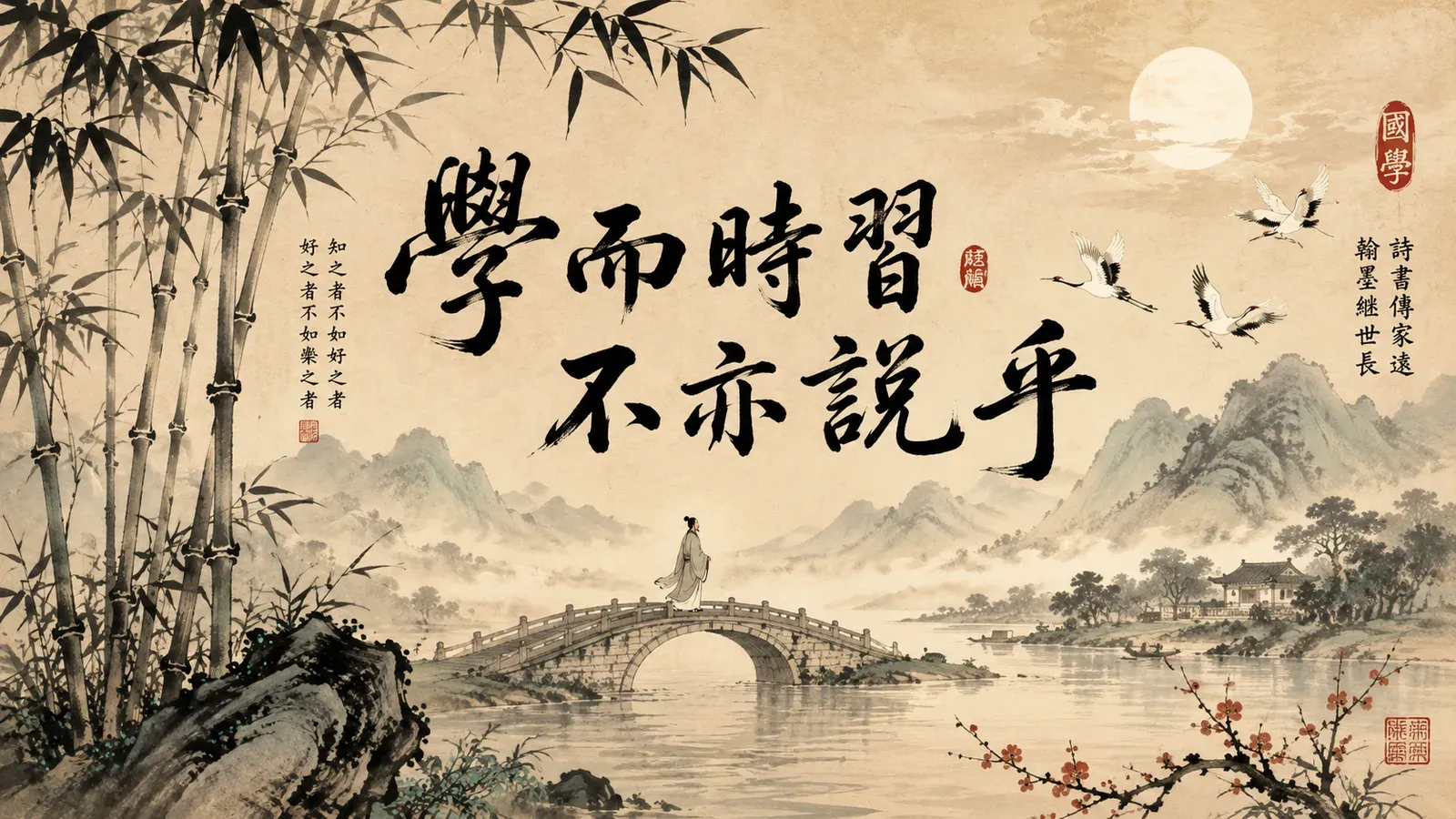
A four-character Chinese idiom, a chengyu, can pack a whole proverb, image, or piece of wisdom into four characters, which makes it a wonderful thing to write by hand, whether for practice, a tattoo, a gift, or a personal motto. If you are going to commit one to your skin or a wall, though, understanding and verifying it matters as much as writing it well. Here is how to choose, understand, and write a meaningful chengyu correctly.
Why chengyu are great to write
A chengyu is a natural, meaningful unit: four characters that carry a single idea, which memory holds far better than loose vocabulary, the principle of hierarchical chunking. The characters are often elegant and recur across the language, so learning to write one idiom teaches characters you will meet again, and the meaning gives the whole piece a hook that makes it stick and makes it worth writing. That combination of compactness and depth is why chengyu are a favorite for calligraphy and meaningful pieces.
Understand it before you commit it
Here is the part to take seriously, especially for a tattoo or a gift. A chengyu’s meaning is often not literal, it comes from a story or a classical usage, so a word-by-word reading can mislead, and choosing one you do not fully understand risks a piece that says something other than you intend. So before writing it permanently, confirm the real meaning and usage with reliable sources and, for anything permanent or given to someone, a native speaker, the same verify-first caution as with a Chinese tattoo. Understand the idiom, then write it.
Choose a chengyu that genuinely fits
With the meaning understood, pick an idiom that actually says what you mean. There are chengyu for perseverance, love, harmony, ambition, and much more, and the right one is the one whose real meaning, not just its surface, matches your intent. Knowing what each character contributes helps you feel whether the idiom fits, which is sharper when you notice which stroke carries a character’s emotional weight.
Write it correctly and from memory
Once you have the right idiom, learn to write it properly: break each character into components, learn the stroke order, and produce the whole idiom from memory rather than tracing. Producing it engages the generation effect, and correct stroke order makes the four characters flow and balance, which matters for a calligraphic or tattoo piece. Writing it from memory also means you truly know it, so a wrong character on the stencil would be obvious to you, the same self-checking value as learning to write gracefully with an Apple Pencil.
A plan for a meaningful chengyu
- Find a chengyu whose real meaning fits your intent.
- Confirm the meaning and usage with reliable sources, and a native speaker if permanent.
- Learn each character by its components and stroke order.
- Write the whole idiom from memory, not by tracing.
- Refine the balance with a grid, then a calligraphic finish if you want.
This pairs with using pressure for better strokes and a calligraphy tracing setup once the characters are correct.
How Hanzi Write Practice fits
Hanzi Write Practice helps you write the chengyu correctly and from memory. It hides the characters, you produce them on a grid, and it checks stroke order and structure, showing the component breakdown, with spaced repetition. So once you have chosen and verified a meaningful idiom, the app builds your ability to write all four characters correctly and confidently, which is what a tattoo, gift, or calligraphy piece deserves. It builds the writing; you supply the verified meaning, on the foundation of the case for a writing app.
Bottom line
A meaningful chengyu is a powerful, motivating thing to write by hand, but if it is permanent or a gift, understand and verify the idiom before you commit it, then learn its characters by components and write it from memory with correct stroke order. Hanzi Write Practice drills that writing, and it is in early access, so join the list.
Frequently asked questions
How do I practice writing a meaningful four-character chengyu?
Choose an idiom whose real meaning fits your intent and verify it with reliable sources, and a native speaker if it is permanent, then learn each character by its components and stroke order and write the whole idiom from memory rather than tracing. Hanzi Write Practice is ideal for the writing, hiding the characters, checking stroke order and structure, and using spaced repetition, so you can write all four characters correctly and confidently.
Why verify a chengyu’s meaning before writing it?
Because a chengyu’s meaning is often not literal, it comes from a story or classical usage, so a word-by-word reading can mislead, and a permanent piece like a tattoo could end up saying something you did not intend. Confirming the real meaning and usage with reliable sources, and a native speaker for anything permanent, protects you.
Are chengyu good for learning characters?
Yes. A chengyu is a compact, meaningful unit of four characters, which memory holds well, and the characters are often elegant and recurring, so learning to write one idiom teaches characters you will see again. The built-in meaning makes them motivating and memorable, which is why they are a favorite for writing practice.
Should I write a chengyu in traditional or simplified?
Use the script that suits your goal: simplified for the mainland, traditional if you lean toward the classical or calligraphic, which is common for chengyu since many come from classical sources. Whichever you choose, get the form and stroke order correct first, then refine the calligraphic style.
Want to write a meaningful idiom right? Join early access and learn it from memory.